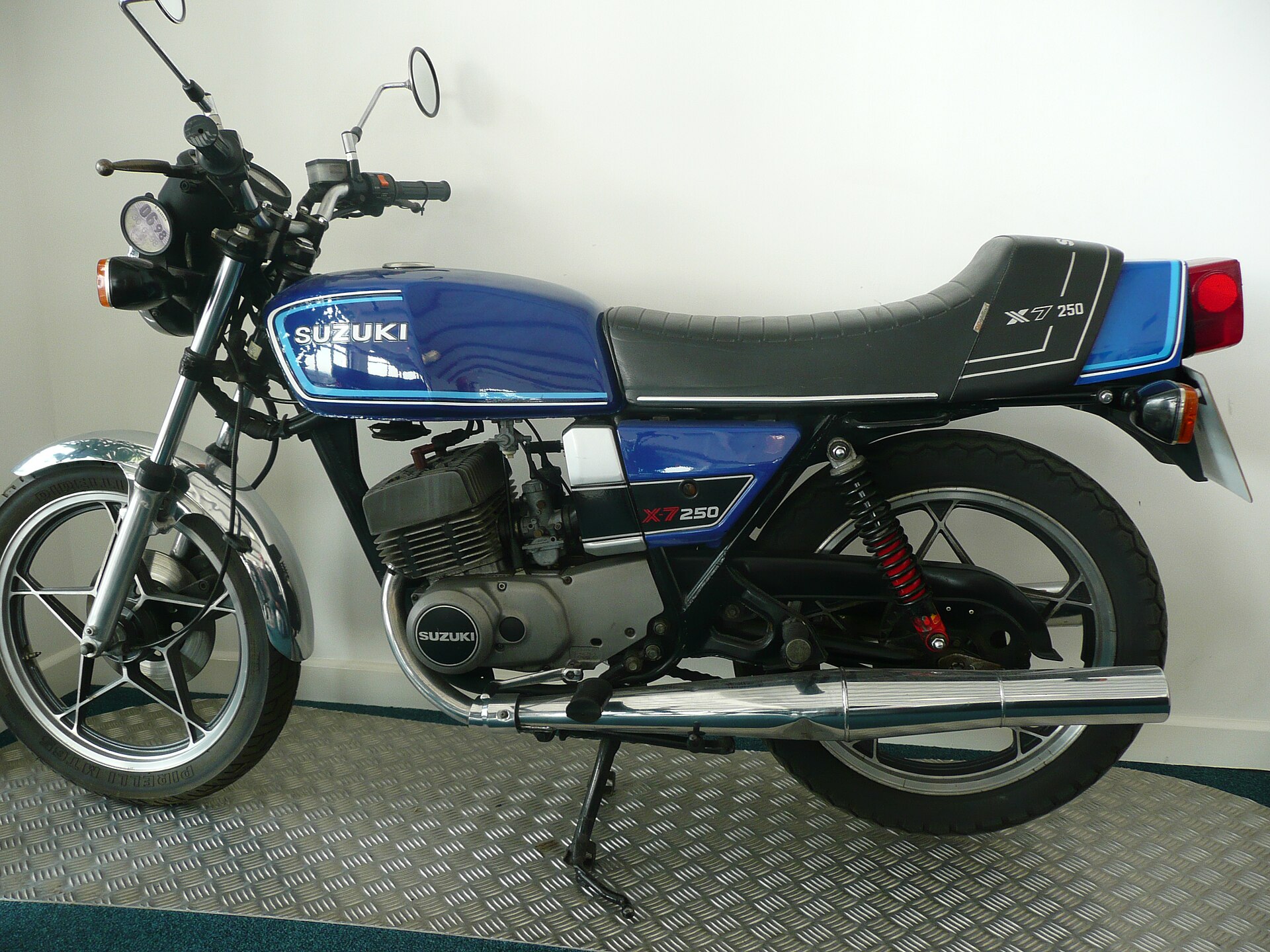
Suzuki GT250 X7
85/100 Overall
72 On the road98 As a classic
Classic motorcycle head-to-head
Suzuki GT250 X7 scores 85/100 overall against Yamaha XT250 on 77/100. On the road: 72–70. As classics: 98–83. Overall result: Suzuki GT250 X7.
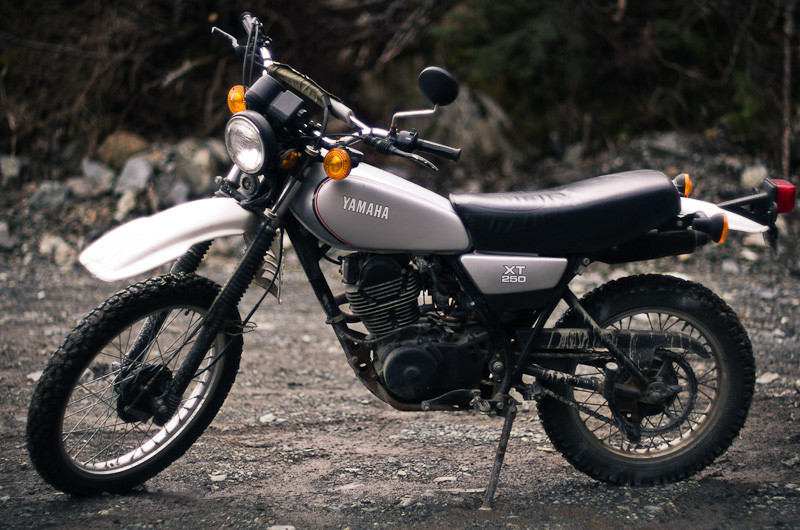
Photo: Original uploader was RXrenesis8 at en.wikipedia · CC BY-SA 3.0
The numbers
| Category | Suzuki X7 | Yamaha XT250 | Advantage |
|---|---|---|---|
| road | |||
| PerformanceDirect comparison of power, acceleration and usable performance across the pre-1990 classic field. | 8 | 6 | Suzuki X7 |
| HandlingSteering, stability, weight and real-road manners. | 9 | 8 | Suzuki X7 |
| BrakingDirect comparison of real stopping ability without an age allowance. | 7 | 6 | Suzuki X7 |
| ReliabilityEngine, electrics and general dependability when properly maintained. | 7 | 8 | Yamaha XT250 |
| Ease of ownershipMaintenance, parts supply and access to specialist knowledge. | 7 | 8 | Yamaha XT250 |
| ComfortRiding position, vibration and suitability for longer journeys. | 5 | 6 | Yamaha XT250 |
| classic | |||
| StylingDesign quality, visual presence and period appeal. | 9 | 8 | Suzuki X7 |
| Historical importanceInfluence on motorcycling and importance within its era. | 10 | 8 | Suzuki X7 |
| Collector appealLong-term desirability among classic motorcycle enthusiasts. | 10 | 8 | Suzuki X7 |
| CharacterSound, feel, personality and memorable riding experience. | 10 | 9 | Suzuki X7 |
you want the light, fast 250 that became a British learner legend and one of Suzuki's most memorable road bikes.
you want a light, useful trail bike with dependable four-stroke power and genuine on-road and off-road versatility.
Background
The Suzuki GT250 X7 was produced from 1978–1981 and used a 247cc air-cooled two-stroke parallel twin. Within this comparison library it stands out particularly for historic importance, collector appeal, character. It suits riders who value the qualities described in its original profile rather than choosing by specification alone.
The Yamaha XT250 was produced from 1980–1983 and used a 249cc air-cooled four-stroke single. Within this comparison library it stands out particularly for character, styling, reliability. It suits riders who value the qualities described in its original profile rather than choosing by specification alone.
Interesting details
Present-day appeal
Collector interest is strongest where condition, originality and correct period details support the identity of the Suzuki GT250 X7. Its library score for historic importance is 10/10. Values and desirability can vary substantially between years, specifications and restoration quality, so individual examples should be assessed on their own evidence.
Collector interest is strongest where condition, originality and correct period details support the identity of the Yamaha XT250. Its library score for character is 9/10. Values and desirability can vary substantially between years, specifications and restoration quality, so individual examples should be assessed on their own evidence.
Before you buy
Period opposition
Final result
Suzuki GT250 X7 wins the direct on-the-road comparison. Suzuki GT250 X7 wins the classic-motorcycle comparison. Suzuki GT250 X7 takes the overall result after the road and classic scores are weighted equally.